Thursday, April 12, 2012

Of First Importance

I handed on to you as of first importance what I in turn had received: that Christ died for our sins in accordance with the scriptures, and that he was buried, and that he was raised on the third day in accordance with the scriptures. (1 Corinthians 15:3-4)
Isaiah 25:6-9, 1 Corinthians 15:1-11, John 20:1-18

On Good Friday I offered a meditation on one of the Seven Last Words of Jesus from the cross, 'My God, my God, why have you forsaken me?' in which I shared the horrific story of Christian Choate who was kept in a dog cage and eventually beaten to death by his father. I decided to repeat the story on Easter morning to explore what hope the resurrection might shine on such a story (in retrospect the story might have been a bit harsh for Easter Sunday).

Such stories are the test of anything we say about God and faith. I agree with Karl Barth that God earns the right to be God in this world on the cross. And it does matter to me that, as Paul Claudel wrote, Jesus fills suffering with his presence. Similarly, William Temple:
The revelation of God’s dealing with human sin shows God enduring every depth of anguish for the sake of His Children. . . All that we can suffer of physical or mental anguish is within the divine experience. . . .He does not leave this world to suffer while He remains at ease apart; all suffering of the world is His. . . Only such a God can be God of the world we know.
- Christus Veritas
The Christian story of Incarnation and cross includes the promise of God’s solidarity with his creatures caught in the web of sin, brokenness, and death.

What more can we say about the good news of Jesus Christ in light of the tragic story of Christian Choate?

In his first letter to the young church in Corinth, Paul reminds them of what he considered of first importance – what he in turn had received: that Christ died for our sins in accordance with the scriptures, and that he was buried, and that he was raised on the third day in accordance with the scriptures.

Christ died for our sins according to the scriptures.

I suspect few of us have done anything as egregious as Christian Choate’s father. But each of us has failed to love as we are meant to love. Each of us has been negligent of God and neighbor. Each of us has contributed in ways large or small to the mess of the world.

And yet, in spite of that, God demonstrates his own love for us in this: While we were still sinners, Christ died for us (Romans 5:8). William Temple wrote,
In the most true sense [God] loves me even while I sin; but it cannot be said too strongly that there is a wrath in God against my sinning; God's Will is set one way and mine is set against it. There is a collision of wills; and God's Will is not passive in that collision.

The cross is the collision of those wills in which God’s love overcomes all our unlove – all of our envy and enmity, all of our indifference. God poured out his love on the hard wood of the cross and thereby entered into the worst humans can do and made a way for us to enter into his forgiveness. There is no one and no deed – including Christian Choate's dad – that is beyond forgiveness if we are willing to turn toward God’s outstretched arms and receive it.

I suppose, in ways we do not know, we have to accept that Christian Choate, as part of the human web of sin, needed that forgiveness as well. But that is where I think an exclusive focus on the cross and our need for forgiveness starts to fall short. Is it really satisfactory if all we can say about Christian Choate is we hope he had an opportunity to say the Jesus Prayer and receive God’s forgiveness before his dad beat him to death? Especially given that we have no evidence that he had ever heard anything about Jesus, let alone enough to respond? And if he didn’t? Were those horrific thirteen years just a brief prelude to an eternity in hell?

I believe the Christian hope is more than that. In Christ, God has addressed more than our guilt. In Christ, God has addressed the deep wound of humanity, and of human history and, indeed, all of creation.

Few of us have suffered anything as terrible as Christian Choate – though my wife, who is a therapist, told me recently that as many as one in three girls and one in six boys are sexually molested. So maybe more of us have stories of suffering and sorrow than we usually let on. But even if we have avoided abuse of that nature, each of us bears the wounds and brokenness endemic to humanity. We don’t just need forgiveness. We need healing.

It is important to note that healing was as significant a part Jesus’ ministry as was his call to repent and offer of forgiveness. His mercy included both. So did his dying and rising.

He was raised on the third day in accordance with the scriptures.

Handing on to the Corinthians that which he considered of first importance, Paul referred to the resurrection using the exact language he used for the death of Christ suggesting that the two go together as two aspects of one salvific intervention. Good Friday and Easter Sunday are two sides of the one coin of the world’s redemption.

In some theologies and popular pieties Jesus’ resurrection is treated as an addendum to what is considered the really important thing which was Jesus’ death on the cross for our sins. The resurrection is sometimes reduced to little more than proof of Jesus’ divinity or the assurance that there might be life after death. At most it is God’s vindication of Jesus’ life and message. Though I emphatically affirm that it is the latter of these, it is also much more.

The crucifixion and resurrection include the promise of healing, transformation, restoration, and new creation. I am persuaded that that is true for the past as well as the present or the future. As Wolfhart Pannenberg has written,
The kingdom of God embraces the earlier generations of mankind as well as the coming ones, and hope for the coming of the rule of God does not only expect salvation for the last generation; it is directed towards the transfiguration of all epochs of human history through the fire of divine judgment, which is one with the light of the glory of God.

In the final resurrection and restoration of all things (Acts 3:21), it is not just the memory of Christian Choate’s agony that will be redeemed. It is not just the memory of the Killing Fields and all the trauma, torture, and terror of human history that will be redeemed. The very reality of it will be caught up and transfigured – scars and all.

In the resurrection of Jesus Christ, God has broken open the cage of sin and death and decay that holds us all. The resurrection of Jesus is a ray of light piercing the cloud of Death that is cast over all people (Isaiah 25:6-9) guaranteeing that the world's story ends in resurrection and transformation. Christ has been raised from the dead, the first fruits of those who have died (1 Corinthians 15:20). As Paul insists in Romans 8, that is a promise for all of creation as well. All of creation will be renewed.

In the meantime, creation continues to exist under the reality of death and decay. And not just the creation, but we ourselves, who have the first fruits of the Spirit, groan inwardly while we wait for adoption, the redemption of our bodies (Romans 8:23).

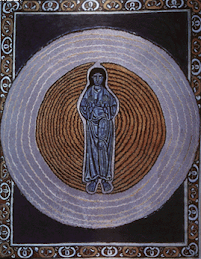
The Gardener come to repair and restore the garden.

Mary Magdalene, who the scriptures point out followed Jesus because he healed her (Mark 16:9), not because she had any unusual need of forgiveness (despite later tradition to the contrary), came to honor him at the tomb. There she found the grave empty. Assuming someone had taken the body (what else would she suspect?) she asks one she takes to be a gardener where they have taken the body of the one she had hoped would redeem Israel. When the gardener speaks her name she recognizes that he is in fact Jesus who had been dead, but is now risen.

But, Mary had rightly identified him the first time. Jesus is the Gardener, come to restore the Garden of creation and history that has been infected with the thorns and thistles of sin and death that have made it a curse for so many to be born (Genesis 3). According to the ancient story, the curse began with a tree in a garden. And the healing and restoration begins with a tree and a garden.

The fullness of the restoration of all things remains a hope of the future. We do not pretend that all is already well. In Christ we have received the first fruits. We live in expectation. But, if we allow the Gardener to work in our lives, forgiveness and healing can begin now. New creation can begin now. And as his Spirit moves in and through us we can participate with him in the healing of the land and live now in the shade of another tree – the tree of life with its twelve kinds of fruit, producing its fruit each month; and the leaves of the tree are for the healing of the nations (Revelation 22:2).

Christ has died for our sins and was raised on the third day. In that two-fold event, God' mercy has entered into the deepest, darkest human reality of sin and suffering and broken out with the promise of forgiveness, healing, and new creation. Let us be glad and rejoice in his salvation.

Previous: Resurrection and New Creation

Next: A Second Big Bang

Wednesday, April 11, 2012

Resurrection and New Creation

John Polkinghorne is an English theoretical physicist, theologian, writer, and Anglican priest. For the fourth day of the Octave of Easter, here is something from his book, The God of Hope and the End of the World:

‘If anyone is in Christ, there is a new creation: everything g old has passed away; see everything has become new!’ (2 Corinthians 5:17). There is a clear resonance with the expectation found, found in the exilic prophets, of the acts of God who is not bound to the past, but who has future surprises in store. From the perspective of the New Testament, however, the reference is not solely to the future. The new creation is ‘in Christ’ and it is his resurrection that is the seed from which the new has already begun to grow.

The scope of the new creation is cosmic and it is not limited to human destiny alone. P. 84

. . .

Just as we see Jesus’ resurrection as the origin and guarantee of human hope, so we can also see it as the origin and guarantee of a universal hope. The significance of the empty tomb is that the Lord’s risen and glorified body is the transmuted form of his dead body. Thus matter itself participates in the resurrection transformation, enjoying thereby the foretaste of its own redemption from decay. The resurrection of Jesus is the seminal event from which the whole of God’s new creation has already begun to grow. P. 113

Previous: Bodily Resurrection: More than a Christian Curiosity

Next: Of First Importance

Tuesday, April 10, 2012

Bodily Resurrection: More than a Christian Curiosity

On this third day of the Octave of Easter, a bit more on Resurrection from Raymond Brown:

In our anticipation of God’s ultimate plan, one of two models is usually followed: the model of eventual destruction and new creation, or the model of transformation. Will the material world pass away all be made new, or will somehow the world be transformed and changed into the city of God? The model that the Christian chooses will have an effect on his attitude toward the world and toward the corporeal. What will be destroyed can have only a passing value; what is to be transformed retains its importance. Is the body a shell that one sheds, or is it an intrinsic part of the personality that will forever identify a person? If Jesus, body corrupted in the tomb so that his victory over death did not include bodily resurrection, then the model of destruction and new creation is indicated. If Jesus rose bodily from the dead, then the Christian model should be one of transformation. The problem of the bodily resurrection is not just an example of Christian curiosity; it is related to a major theme in theology: God’s ultimate purpose in creating.
The Virginal Conception and Bodily Resurrection of Jesus, p. 128-129

A related post: The Matter of Matter and Why it Matters

Previous: Raymond Brown on the Bodily Resurrection

Next: Resurrection and New Creation

Monday, April 9, 2012

Raymond Brown on the Bodily Resurrection of Jesus

Raymond Brown was one of the great biblical scholars of the last third of the 20th century. Brown was a 'critical' scholar who was not afraid to ask hard questions about the scriptures. He was also a faithful Roman Catholic. This is from his historical-critical examination of the resurrection narratives of the gospels:

From a critical study of the biblical evidence I would judge that Christians can and indeed should continue to speak of a bodily resurrection. Our earliest ancestors in the faith proclaimed a bodily resurrection in the sense that they did not believe that Jesus’ body had corrupted in the tomb. However, and this is equally important, Jesus’ risen body was no longer a body as we know bodies, bound by the dimensions of space and time. It is best to follow Paul’s description [in 1 Corinthians 15] of risen bodies as spiritual, not natural or physical (psychos); he can even imply that these bodies are no longer flesh and blood (1 Corinthians 15:50). Small wonder he speaks of a mystery! In our fidelity to proclaiming the bodily resurrection of Jesus, we should never become so defensively governed by apologetics that we do not do justice to this element of transformation and mystery. Christian truth is best served when equal justice is done to the element of continuity implied in bodily resurrection and to the element of eschatological transformation.

The understanding that the resurrection was bodily in the sense that Jesus’ body did not corrupt in the tomb has important theological implications. The resurrection of Jesus was remembered with such emphasis in the church because it explained what God had done for men. Through the resurrection men came to believe in God in a new way; man’s relationship to God was changed; a whole new vision of God and His intention for men was made possible; the whole flow of time and history was redirected. Nevertheless, a stress on the bodily resurrection keeps us from defining this resurrection solely in terms of what God has done for men. The resurrection was and remains, first of all, what God has done for Jesus. It was not an evolution in human consciousness, nor was it the disciples’ brilliant insight into the meaning of the crucifixion–it was the sovereign action of God glorifying Jesus of Nazareth. Only because God has done this for His Son are new possibilities opened for His many children who have come to believe in what He has done.
The Virginal Conception and Bodily Resurrection of Jesus, p. 127-128

Previous: The Break-in of an End-time Reality

Next: Bodily Resurrection: More than a Christian Curiosity

Sunday, April 8, 2012

The Break-in of an End-time Reality

For each of the days of the Octave of Easter, I am going to offer a quote or two on the meaning of resurrection – Jesus’ and ours. (I did something like this for the 12 Days of Christmas)

The following are from The Apostles' Creed in light of Today’s Questions by Wolfhart Pannenberg:

If we ask about the origins of Christianity, not merely in the sense of enquiring what the first Christians believed , but in the sense of a present-day evaluation of what was really at the bottom of the story which started Christianity off, then we have to face up to the problem of the Easter events. P. 113

Can the historian reckon with the break-in of an end-time reality which does not take the same form as other historical events and which rests on a radical transformation of the present world? Can he consider it possible for such and end-time event to make itself felt beforehand, and already to become fully active in the present world? P. 108

The assertion that Jesus is risen from the dead remains a matter of dispute in a special degree because it cuts so deeply into fundamental questions of the understanding of reality. P. 114

The salvation of the individual, the wholeness of his existence which had remained a fragment because of misfortune, error, and death, is linked together with the destiny of mankind in the idea of a common resurrection of the dead at the end of the history of this present world. This also finds expression in the association of the general resurrection of the dead with the Last Judgment and the full revelation of the kingdom of God, which will complete man’s social destiny. P. 175

The kingdom of God embraces the earlier generations of mankind as well as the coming ones, and hope for the coming of the rule of God does not only expect salvation for the last generation; it is directed towards the transfiguration of all epochs of human history through the fire of divine judgment, which is one with the light of the glory of God. P. 178

Next: Raymond Brown on the Bodily Resurrection

Saturday, April 7, 2012

My God, my God, why have you forsaken me?

On Good Friday, the two Episcopal Churches and three Lutheran Churches of Glen Ellyn sponsored a ‘Tre Ore’ service on the Seven Last Words of Jesus from the Cross. Each church took responsibility for one of the words including a mediation by one of the clergy. I was assigned "My God, my God, why have you forsaken me?" from Matthew 27:45-49,
From noon on, darkness came over the whole land until three in the afternoon. And about three o'clock Jesus cried with a loud voice, "Eli, Eli, lema sabachthani?" that is, "My God, my God, why have you forsaken me?" When some of the bystanders heard it, they said, "This man is calling for Elijah." At once one of them ran and got a sponge, filled it with sour wine, put it on a stick, and gave it to him to drink. But the others said, "Wait, let us see whether Elijah will come to save him."

Meditation:

Christian Choate’s body was discovered near Gary, Indiana last summer. He was buried in a shallow grave under a slab of concrete behind the trailer where he once had lived. He had actually died two years earlier. He was only 13.

Those were thirteen years of misery. Years of isolation and neglect. Years of verbal and physical abuse at the hands of his father and step-mother. He lived with them because his mother and her boyfriend had been accused of molesting him.

He was kept home from school and home schooled. The essays his step-mother asked him to write are heart-breaking. She asked to write about "Why do you want to play with your peter? Why do you still want to see your mom? Why can't you let the past go? What does it mean to be part of a family?"

Christian spent much of the last year of his life locked in a three-foot-high dog cage, with little food and drink and few opportunities to leave. He was let out briefly to clean and vacuum. And he endured savage beatings from his father.

One night in April of 2009, Christian was too weak to keep his food down. His father beat him to the point of unconsciousness, then locked his limp body in the cage. The next morning, his sister Christina found him dead.

Christian wrote of why nobody liked him and how he just wanted to be liked by his family. He stated that he wanted to die because nobody liked the way he 'acted.' Christian's writings detail a very sad, depressed child who often wondered when someone, anyone, was going to come check on him and give him food or liquid. Christian often stated he was hungry or thirsty.
[Link to the news story]

But Elijah did not come for Christian. And we have no knowledge of his hearing God or being aware of God’s presence. Given the constraints on his life, we don’t even know if he knew enough to cry out, "My God, my God, why have you forsaken me?"

"My God, my God, why have you forsaken me?"

It is the most disturbing of the words Jesus spoke from the cross. But, for me it is the most hopeful. The truth is I often find it hard to believe in God. Much god-talk strikes me as little more than sentimental fancy. Talk of god in a baby’s smile or the beauty of nature doesn’t quite cut it. Generic talk of “the Holy” or “the Sacred”? I don’t know what that means. Even talk of god as love, by itself, seems to me to too easily slip into sentimentality. All such talk falls flat in the face of the horror of Christian Choate’s story.

But, Good Friday is different. From the cross Jesus cried with a loud voice, "My God, my God, why have you forsaken me?" What are we to make of that? I want to suggest that there are at least a couple of things we can say.

Jesus, in the fullness of his humanity, experiences the horror of being betrayed, denied and abandoned by his friends and rejected by his people. Jesus experiences all the torture, terror, and tragedy that humanity inflicts upon itself when it turns from God.

And, mystery of mysteries, Jesus, who knew such intimacy with the One he called ‘Father,’ experienced the awful, bewildering silence of God. Even as we remember that Jesus cried out using the worship language of his people using Psalm 22, there is no escaping that it was a cry of anguish. We dare not try to get around that.

But there is a second thing. In Jesus, we affirm that God’s very self entered into the darkest depths of human experience.
As Madeleine L’Engle wrote,
For Jesus, at-one-ment was not only being at-one with the glory of the stars, or the first daffodil in the spring, or a baby’s laugh. He was also at-one with all the pain and suffering that ever was, is, or will be. On the cross Jesus was at-one with the young boy with cancer, the young mother hemorrhaging, the raped girl [and at-one with Christian Choate and his sister. And even with the broken tortured spirits of their parents].

We can withdraw, even in our prayers, from the intensity of suffering. Jesus, on the cross, experienced it all. When I touch the small cross I wear, this, then, is the meaning of the symbol.

The cross is what makes it possible to believe in God at all. That’s why this is a good Friday.

William Temple, who was Archbishop of Canterbury during the first years of WWII, wrote in Christus Veritas,
The revelation of God’s dealing with human sin shows God enduring every depth of anguish for the sake of His Children. . . All that we can suffer of physical or mental anguish is within the divine experience. . . .He does not leave this world to suffer while He remains at ease apart; all suffering of the world is His.

Temple goes on to claim, “Only such a God can be God of the world we know.” Only such a God can be God in a world that includes multiple stories like that of Christian Choate. Only such a God can be God of our own stories.

"My God, my God, why have you forsaken me?"

Let’s be clear. This is not Jesus vs God. This is not God the Father torturing Jesus so he won’t have to torture us. The God we know through Jesus is not like Christian Choate’s father. This is God, the Holy Trinity – Father, Son, and Holy Spirit – working in harmony to address the deepest, darkest depths of human need to bring forgiveness and healing and the promise of restoration.

And we know – thanks be to God, we know – that whatever Jesus experienced in his cry of dereliction, he did not despair and God did not abandon him. We know the rest of the story. We do not need to pretend on Good Friday that we don’t know what happens on Easter. We know that God was in Christ reconciling the world. Through the cross and resurrection God has come to transform the torture, tragedy, and terror. But we will save that for Sunday.

Today let us give thanks that in Jesus’ cry, "My God, my God, why have you forsaken me?" there is the assurance that there is no human experience – not even the appalling, heart-rending experience of Christian Choate – that is finally God-forsaken.

(The follow-up sermon for Easter Sunday is here: Of First Importance)

Tuesday, April 3, 2012

The Way of the Cross = the Way of Mercy & Forgiveness

There is no lesson Christ loves better to drive home, than this disconcerting fact of our common human fragility: which, when we have truly grasped it, kills resentment and puts indulgent pity in its place. Let the man, the group, the nation that is without sin cast the first stone. God’s forgiveness means the compassionate recognition of the weakness and instability of man; how often we cannot help it, how truly there is in us a ‘root and ground in sin,’ an implicit rebellion against the Holy, a tendency away from love and peace. And this requires of us the constant compassionate recognition of our fellow-creatures’ instability and weakness; of the fact that they too cannot help it. If the Christian penitent dares to ask that his many departures from the Christian norm, his impatience, gloom, self-occupation, unloving prejudices, reckless tongue, feverish desires, with all the damage they have caused to Christ’s Body, are indeed to be set aside, because – in spite of all – he longs for God and Eternal Life; then he too must set aside and forgive all that impatience, selfishness, bitter and foolish speech, sudden yieldings to base impulse in others have caused him to endure. Hardness is the one impossible thing. Harshness to others in those who ask and need the mercy of God sets up a conflict at the very heart of personality and shuts the door upon grace. And that which is true of the individual soul, is true of the community; the penitent nation seeking the path of life must also conform to the law of charity.

This principle applied in its fullness makes a demand on our generosity which only a purified and self-oblivious love can hope to meet. For every soul that appeals for God’s forgiveness is required to move over to His side, and share the compassionate understanding, the unmeasured pity, with which He looks on human frailty and sin. So difficulty is this to the proud and assertive creature, that it comes very near the end of our education in prayer. Indeed, the Christian doctrine of forgiveness is so drastic and so difficult, where there is a real and deep injury to forgive, that only those living in the Spirit, in union with the Cross, can dare to base their claim on it.

- from Abba by Evelyn Underhill