Showing posts with label Julian of Norwich. Show all posts

Saturday, June 2, 2012

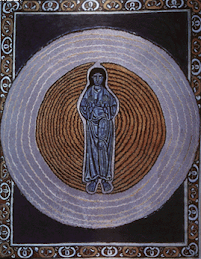
Julian on the Trinity

“Suddenly the Trinity filled my heart full of the greatest joy, and I understood that it will be so in heaven without end to all who will come there. For the Trinity is God, God is the Trinity. The Trinity is our maker, the Trinity is our protector, the Trinity is our everlasting lover, the Trinity is our endless joy and our bliss, by our Lord Jesus Christ and in our Lord Jesus Christ. . . for where Jesus appears the Trinity is understood.”
Julian of Norwich (1342-1423)

Tuesday, May 8, 2012

Praying with Julian’s Hazelnut


I invite you to try this prayer experiment based on Julian of Norwich's hazelnut vision:

  • Get a 'hazelnut'. This can be a real hazelnut or anything similar in size and roundness, e.g., a marble, a small stone, a balled-up half sheet of paper, etc.


  • Intentionally set aside a period of time - 5 minutes, 10 minutes, 15 minutes, or more if you can. And a place where you can be alone and quiet. If you have a timer set it for the amount of time you have set aside so you won't be watching the clock.

  • Sitting comfortably and with eyes closed, let yourself relax. Rest your hands open on your lap holding the hazelnut.

  • Breath in slowly through your nose and out though your mouth. Pay attention to the breath.

  • Imagine the small thing in your hands as representing all that it is created. Imagine it representing your own life. Or the life of someone else on your heart. Give thanks to God for making it, for loving it, and for keeping it.

  • Begin repeating 'made, loved, kept' quietly or silently forming the words with your mouth.

  • When other thoughts arise, do not fight them. Rather, gently let go of them, turn your heart back towards God and the small thing and resume repeating, 'made, loved, kept'.
  • At the end of the prayer period, return your attention to your breath and remain in silence with eyes closed for a while.

  • End by again giving thanks to God for making it all, for loving it all, and for keeping it all.

  • If you like, carry your hazelnut in your pocket or place it where you will see it throughout the day as a token of remembrance.

I have found that doing this daily can serve to settle my heart into the heart of God where my own life, the lives around me, and the larger world gain a different perspective. I begin to share some of the hope and joy that was characteristic of Julian of Norwich.

That is not to say that it always feels that way or that the prayer automatically engenders warm and pleasant feelings. Julian knew better:

Our Lord is most glad and joyful because of our prayer; and he expects it, and he wants to have it, for with his grace it makes us like to himself in condition as we are in nature, and such is his blessed will. For he says: Pray wholeheartedly, though it seems to you that this has no savour to you; still it is profitable enough, though you may not feel that. Pray wholeheartedly, though you may feel nothing, though you may see nothing, yes, though you think that you could not, for in dryness and ib barrenness, in sickness and in weakness, then is your prayer most pleasing to me, though you think it almost tasteless to you. And so is all you living prayer in my sight. (14th Revelation, p. 249)

Still, Julian was undaunted and encourages us to persevere because:

Prayer unites the soul to God, for though the soul may always be like God in nature and in substance restored by grace, it is often unlike him in condition, through sin on our part. Then prayer is a witness that the soul wills as God wills, and it eases the conscience and fits us for grace. And so he teaches us to pray and to have firm trust that we shall have it; for he beholds us in love, and wants to make us partners in his good will and work. (14th Revelation, p. 253)


And:

Truth sees God, and wisdom contemplates God, and of these two things comes a third, and that is a marvelous delight in God, which is love. (14th Revelation, p. 256)
The Julian quotes are from Julian of Norwich: Showings (Classics of Western Spirituality).

Back to Outline

Meditation 3: God keeps it

Julian discerned three properties in her vision of the thing no bigger than a hazelnut representing all that is made: “In this little thing I saw three properties. The first is that God made it, the second is that God loves it, the third is that God keeps it.”

Read the following passages from the Bible and Julian. Sit quietly for several minutes meditating on what it means to believe that God ‘keeps’ what he has made and what he loves.  God holds all that is created in his hands and he is working his purpose out. God has a hold on you. And God’s hold on you is always stronger than your hold on God. What does it mean to believe that God keeps and preserves you? Carry that around in your heart for a day.


From the Bible:

  • I am confident of this, that the one who began a good work among you will bring it to completion by the day of Jesus Christ. (Philippians 1:6)
  • For it is God who is at work in you, enabling you both to will and to work for his good pleasure. (Philippians 2:13)
  • If God is for us, who is against us? He who did not withhold his own Son, but gave him up for all of us, will he not with him also give us everything else? Who will bring any charge against God's elect? It is God who justifies. Who is to condemn? It is Christ Jesus, who died, yes, who was raised, who is at the right hand of God, who indeed intercedes for us. Who will separate us from the love of Christ? Will hardship, or distress, or persecution, or famine, or nakedness, or peril, or sword? As it is written, "For your sake we are being killed all day long; we are accounted as sheep to be slaughtered." No, in all these things we are more than conquerors through him who loved us. For I am convinced that neither death, nor life, nor angels, nor rulers, nor things present, nor things to come, nor powers, nor height, nor depth, nor anything else in all creation, will be able to separate us from the love of God in Christ Jesus our Lord. (Romans 8:31-39)

From Julian:

  • See, I am God. See, I am in all things. See, I do all things. See, I never remove my hands from my works, nor never will I without end. See, I guide all things toward the end that I ordain them for, before time began, with the same wisdom, and love with which I made them; how should anything be amiss? (3rd Revelation, p. 199)
  • God wishes us to know that he keeps us safe all the time, in sorrow and in joy; and sometimes a man is left to himself for the profit of his soul, although his sin is not always the cause. (7th Revelation, p. 205)
  • Because of the tender love which our good Lord has for all who will be saved, he comforts readily and sweetly, meaning this: It is true that sin is the cause of all this pain, but all will be well, and all will be well, and every kind of thing will be well. (13th Revelation, p. 225)
  • Our good Lord answered to all the questions and doubts which I could raise, saying most comfortingly: I may make all things well, and I shall make all things well, and I will make all things well. (13th Revelation, p. 229)
  • The place that Jesus takes in our soul he will never depart from.  (14th Revelation, p. 287)
  • Enduring and marvelous is that love which cannot and will not be broken because of offences. (14th Revelation, p. 300)
  • It is his office to save us, it is his glory to do it, and it is his will that we know it; for he wants us to love him sweetly and trust in him meekly and greatly. And he revealed this in these gracious words: I protect you very safely. (14th Revelation, p. 302)


Meditation 2: God loves it

Julian discerned three properties in her vision of the thing no bigger than a hazelnut representing all that is made: “In this little thing I saw three properties. The first is that God made it, the second is that God loves it, the third is that God keeps it.”
 

Read the following passages from the Bible and Julian. Sit quietly for several minutes meditating on what it means to believe that God loves what he has made. God delights in everything in the universe – from supernovae to subatomic particles, from humpback whales to banana slugs. What does it mean to believe that God loves and delights in every single human being? What does it mean to believe that God loves and delights in you? God desires your good. Carry that around in your heart for a day.

From the Bible:

  • For God so loved the world that he gave his only Son, so that everyone who believes in him may not perish but may have eternal life.” (John 3:16)
  • Having loved his own who were in the world, he loved them to the end. (John 13:1)
  • But God proves his love for us in that while we still were sinners Christ died for us. (Romans 5:8)
  • I have been crucified with Christ. It is no longer I who live, but Christ who lives in me. And the life I now live in the flesh I live by faith in the Son of God who loved me and gave himself for me. (Galatians 2:20)
  • But God, being rich in mercy, because of the great love with which he loved us, even when we were dead in our trespasses, made us alive together with Christ—by grace you have been saved (Ephesians 2:4-5)
  • God's love was revealed among us in this way: God sent his only Son into the world so that we might live through him. In this is love, not that we loved God but that he loved us and sent his Son to be the atoning sacrifice for our sins. Beloved, since God loved us so much, we also ought to love one another.  (1 John 4:9-11)

From Julian:

  • Then Jesus our good Lord said: If you are satisfied, I am satisfied. It is a joy, a bliss, an endless delight to me that ever I suffered my Passion for you; and if I could suffer more, I should suffer more. (9th Revelation, p. 216)
  • For we are his bliss, because he endlessly delights in us; and so with his grace shall we delight in him. (9th Revelation, p. 219)
  • Our good Lord said most joyfully: See how I love you, as if he had said, my darling, behold and see your Lord, your God, who is your creator and your endless joy; see your own brother, your savior; my child, behold and see what delight and bliss I have in your salvation, and for my love rejoice with me. (10th Revelation, p. 221)
     
  • Do you wish to know the Lord’s meaning in this? Know it well, love was his meaning. Who reveals it to you? Love. Why does he reveal it to you? Love. What did he reveal to you? Love. Why did he reveal it to you? For love. Remain in this and you will never know different, without end. (15th  Revelation, p. 342)

Julian understands that God’s love is not simple affirmation, but also entails the promise of transformation:
  • He says: I shall completely break down in you your empty affections and your vicious pride, and then I shall gather you and make you meek and mild and holy through union with me. (13th Revelation, p. 227)


Back to Outline

Meditation 1: God made it

Julian discerned three properties in her vision of the thing no bigger than a hazelnut representing all that is made: “In this little thing I saw three properties. The first is that God made it, the second is that God loves it, the third is that God keeps it.”


Read the following passages from the Bible and Julian. Sit quietly for several minutes meditating on what it means to believe that God made the whole universe. That God made this fragile earth our island home with all its beauty and strangeness. That God declares it all very good. What does it mean to believe that God made you in the image of God’s own self? That therefore you along with every other person have infinite worth?  Carry that around in your heart for a day.

From the Bible:
  • So God created humankind in his image, in the image of God he created them; male and female he created them. God blessed them, and God said to them, "Be fruitful and multiply, and fill the earth and subdue it; and have dominion over the fish of the sea and over the birds of the air and over every living thing that moves upon the earth."  . . . God saw everything that he had made, and indeed, it was very good. And there was evening and there was morning, the sixth day. (Genesis 1:27-31) 
  • When I look at your heavens, the work of your fingers, the moon and the stars that you have established; what are human beings that you are mindful of them, mortals that you care for them? Yet you have made them a little lower than God, and crowned them with glory and honor. (Psalm 8: 3-5)
  • I praise you because I am fearfully and wonderfully made; your works are wonderful, I know that full well. My frame was not hidden from you when I was made in the secret place. When I was woven together in the depths of the earth, your eyes saw my unformed body. (Psalm 139: 14-16)
  • For everything created by God is good, and nothing is to be rejected, provided it is received with thanksgiving; (1 Timothy 4:4)
From Julian:
  • The blessed Trinity is always wholly pleased with all its work. (3rd Revelation, p. 19)
  • God rejoices in the creature and the creature in God, endlessly marveling, in which marveling he sees his God, his Lord, his Maker, so exalted, so great, and so good in comparison with him that the creature hardly seems anything to itself. But the brightness and clearness of truth and wisdom make him see and know that he is made for love, in which God endlessly protects him. (14th Revelation, p. 256)
  • Greatly ought we to rejoice that God dwells in our soul; and more greatly ought we to rejoice that our soul dwells in God. Our soul is created to be God’s dwelling place, and the dwelling of our souls is God, who is uncreated. It is a great understanding to see and know inwardly that God, who is our Creator, dwells in our soul, and it is a far greater understanding to see and know inwardly that our soul, which is created, dwells in God in substance, of which substance, though God, we are what we are. (14th Revelation, p. 285)
The Julian quotes are from Julian of Norwich: Showings (Classics of Western Spirituality).


Praying with Julian of Norwich and the Hazelnut


The Vision of a Little Thing the Quality of a Hazenut

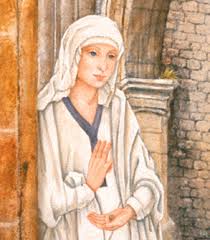
I count Julian of Norwich (1342-1416) among my mentors in the faith. Her writing has made a deep impression on me. I have also found her a congenial companion in prayer. 
When she was 30 years old, Julian contracted a grave illness and came so near death they gave her last rites. At the end of her illness, she had several visions, or showings, that she understood to have come from God. She spent the next 20 years reflecting on these visions and writing down what she had learned from them. Perhaps, the most famous of those showings is this one:

And in this he showed me a little thing, the quantity of a hazel nut, lying in the palm of my hand, as it seemed. And it was as round as any ball. I looked upon it with the eye of my understanding, and thought, 'What may this be?' And it was answered generally thus, 'It is all that is made.' I marveled how it might last, for I thought it might suddenly have fallen to nothing for littleness. And I was answered in my understanding: It lasts and ever shall, for God loves it. And so have all things their beginning by the love of God.
In this little thing I saw three properties. The first is that God made it. The second that God loves it. And the third, that God keeps it. But what is this to me? Truly, the Creator, the Keeper, the Lover. For until I am substantially “oned” to him, I may never have full rest nor true bliss. That is to say, until I be so fastened to him that there is nothing that is made between my God and me.
This little thing which is created seemed to me as if it could have fallen into nothing because of its littleness. We need to have knowledge of this, so that we may delight in despising as nothing everything created, so as to love and have uncreated God. For this is the reason why our hearts and souls are not in perfect ease, because here we seek rest in this thing which is so little, in which there is no rest, and we do not know our God who is almighty, all wise and all good, for he is true rest. God wishes to be known, and it pleases him that we should rest in him; for everything which is beneath him is not sufficient for us. And this is the reason why no soul is at rest until it has despised as nothing all things which are created. When it by its will has become nothing for love, to have him who is everything, then is it able to receive spiritual rest. (1st Revelation)


Seeing the fragile thing in the palm of her hand, Julian wondered, “I was amazed that it could last, for I thought that because of its littleness it would suddenly have fallen into nothing.”

Julian had reason to wonder if the world she knew might fall into nothing. As a child she lived through the Black Death, the plague that decimated Europe from 1348 - 1351. Nearly half of the city of Norwich died in a three-year span! The resulting social and economic disruption are hard to fathom.

The plague returned, though less virulently, fifteen years later. Some have speculated that she might have been married and lost her husband and children in this later plague. 

Julian lived during the seemingly endless 'One Hundred Years War' between England and France.

In 1381, there was a major Peasants' Revolt resulting from years of injustice and unfair taxes.

The church was also in considerable disarray. In the year 1378, the Roman Catholic Church split in what came to be known as the Great Schism. For the next 68 years there were two popes (and for a short time, three!) claiming authority over the Catholic Church. This was bewildering and disillusioning to pious Christians.

And, as noted above, Julian had herself nearly died from serious illness.

Much of this sounds very contemporary. The world we know often seems chaotic, confusing, and tenuous with similar troubles. We, too, have reason to wonder if the world we know might fall into nothing.

And, often enough, our own lives seem so tenuous they might dissolve into nothing. It might be serious illness. It might be job or economic problems. It might be family or relationship difficulties. It might be doubts about faith or uncertainty about love or our competency or our worthiness.  It might be specific or it might be a vague unease. Whatever the cause – fear, anxiety, uncertainty – life can seem quite uncertain and our hold on it unsure. Our hold on God can seem tenuous and unsure. Our hold on ourselves can seem tenuous and uncertain.

In spite of her own suffering, and for all that the world around her seemed in disarray, Julian's writings, while distinctly not Pollyannish, are full of joy and hope in the light of God's love demonstrated in Jesus Christ. She found her ease, not in grasping and clinging to the ephemeral littleness of created reality, but in uniting herself to the abiding love and joy of the uncreated God. I have found in her an invaluable, inspiring, and edifying witness to the Good News.

What follows are three invitations to reflect on aspects of Julian's vision and a proposal for an experiment in prayer.

Meditation 1: God made it

Meditation 2: God loves it