Thursday, October 4, 2012

Francis and the Restoration of Creation

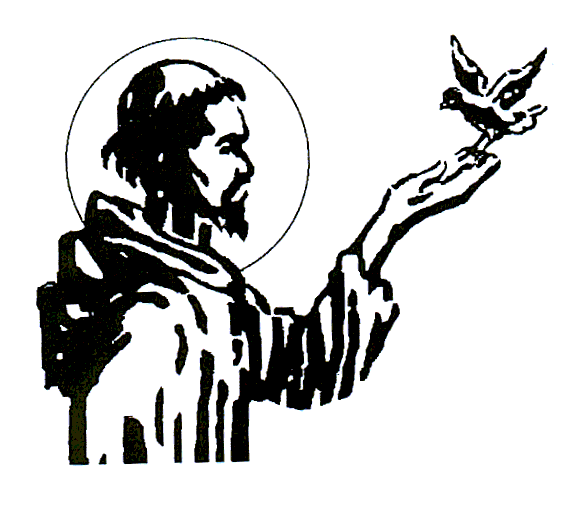
Today is the Feast of St. Francis of Assisi (1181-1226). Francis is well-known for preaching to birds and other creatures. He famously ‘converted’ a wolf that was terrorizing a community (see If necessary, Use Words). There are stories of his tender regard for lambs, rabbits, and even carp. According to the stories, that tenderness and respect was returned. At the time of his death, Larks flew into his room to sing their praises and laments.
 
St. Bonaventure (1221-1274) proclaimed,
The meekness which is necessary, we should learn from St. Francis. For his was an extraordinary meekness, not only toward other people, but also toward animals. He called all animals ‘brother’ or ‘sister’ and we read in the story of his life how even wild animals came running to him as their friend and companion.

And Francis’ attention went beyond animals. According to another legend:
One day Francis was filled with joy because he was beginning to enjoy God in all creatures. He went through the streets singing and inviting everyone to sing along with him. Then he came upon an almond tree, and he said, ‘Brother Almond, speak to me of God,’ And the almond tree blossomed.

These are wonderful stories. But we need to be careful not to romanticize or sentimentalize Francis. His message and his life were shaped by a joyous but austere devotion to Jesus Christ and the way of the cross. And his regard for all God’s creation was rooted in the hope found in Jesus’ crucifixion and resurrection.
 
Further, we should note that the stories of Francis’ appreciation for creation are not just quaint embroidery. They are theologically significant. Nor are they unique in the Christian tradition. There are similar stories through the Church’s history.
 
Here are some examples from the Desert Fathers:
Abba Theon ate vegetables, but only those that did not need to be cooked. They say that he used to go out of his cell at night and stay in the company of the wild animals, giving them drink from the water he had. Certainly one could see the tracks of antelopes and wild asses and gazelles and other animals near his hermitage. These creatures always gave him pleasure.

Another account from the desert:
We came near to a tree, led by our kindly host, and there we stumbled upon a lion. At the sight of him my guide and I quaked, but the saintly old man went unfaltering on and we followed him. The wild beast – you would say it was at the command of God – modestly withdrew a little way and sat down, while the old man plucked the fruit from the lower branches. He held out his hand, full of dates; and up the creature ran and took them as frankly as any tame animal about the house; and when it had finished eating, it went away. We stood watching and trembling; reflecting as well we might what valor of faith was in him and what poverty of spirit in us.

 
And another:
While Abba Macarius (295-392) was praying in his cave in the desert, a hyena suddenly appeared and began to lick his feet and taking him gently by the hem of his tunic, she drew him towards her own cave. He followed her, saying, "I wonder what this animal wants me to do?" When she had led him to her cave, she went in and brought her cubs which had been born blind. He prayed over them and returned them to the hyena with their sight healed. She in turn, by way of thank offering, brought the man the huge skin of a ram and laid it at his feet. He smiled at her as if at a kind person and taking the skin spread it under him.

There are similar stories from some of the Celtic saints:
 
Kevin of Glendulough (d. 618), is said to have had a vision in which an angel appeared to him, telling him to build a large monastery. The angel said that, to prepare the way, he was going to level a nearby small mountain. Kevin thought about it and told the angel, "No, thank you. There are creatures who live on that mountain. That is the habitat and the home of many of God’s creatures and to destroy it – even for something as good and noble as a monastery – would be to make them homeless."
 
Cuthbert (634-687), Bishop of Lindisfarne, was said to have gone out at night to pray on the shore of the ocean. As you can imagine, it is cold on the shore at night in north-eastern England. The story goes that as Cuthbert prayed otters would come out of the water and wrap themselves around his naked feet to keep them warm.
 
And then there is the Russian saint, Seraphim of Sarov (1754-1833), who has sometimes been referred to as the Russian St. Francis given his humble way of life and unusual relationship with wild animals. For years, he lived in an isolated hermitage where only the birds and the wild beasts visited him, and he dwelt with them as Adam did in Paradise. They came at midnight and waited for him to complete his Rule of prayer. Then he would feed bears, lynxes, foxes, rabbits, and even wolves with bread from his hand. There was also a bear which would obey Seraphim and run errands for the saint.
 
Fanciful as these stories are they have important theological meaning:
 
1. They remind us that the idea that humans are somehow fundamentally separate from the rest of creation is not a Christian idea. Classically, Christians have understood themselves to be part of an enchanted cosmos and part of a co-inherent web of enchanted relations with the rest of creation.

It is really only in the modern era that Christians, shaped by secular ways of thinking, have accepted the reduction of creation to mere objects more or less useful for our own selfish ends. Along with this we have allowed our imaginations to be diminished such that we have come to see creation as mere background, more or less unimportant to God’s ultimate plan.
 
2. But these stories about Francis and others point to a hope and a desire that was deep in the church and is deep in the gospel. That desire, that hope, is for a creation healed and restored in harmony. Certainly, we desire harmony among people. God’s vision is for each of us to be reconciled to him. His vision is for humans to be reconciled to one another. But God’s vision is bigger than that. God’s vision and God’s intention is for all creation to be caught up in the divine love and peace. Our hope is not to escape this world, bur that this world and we in it will be healed and transformed.
 
These saints believed that Christ was the first fruits of the new creation, was the first fruits of that peace and harmony that is God’s desire. Their stories point to the hope that one can begin now to live a holy life of anticipation of the peaceable kingdom that Isaiah envisioned – the promise of creation in total harmony:
 
The wolf will live with the lamb,
the leopard will lie down with the goat,
the calf and the lion and the yearling together;
and a little child will lead them.
The cow will feed with the bear,
their young will lie down together,
and the lion will eat straw like the ox.
 
Infants will play near the hole of the cobra;
young children will put their hands into the viper’s nest.
They will neither harm nor destroy
on all my holy mountain,
for the earth will be filled with the knowledge of the LORD as the waters cover the sea” (Isaiah 11:6-9).

Apparently, Francis and others took that seriously, or at least the stories about them take it seriously. And perhaps we should to. They wanted to begin living into it now. Christians need to allow the Holy Spirit to transform our imaginations to see again that we are part of an enchanted web of relation and that God’s splendor is present in it all. Thus all creation is worthy of reverence. And we need to reclaim the comprehensive hope that all creation will be healed, restored, and transformed by God’s resurrection power. And as those who live that hope, Christians might just reclaim the holy task of beginning now to participate in the healing of all that harms or destroys God’s holy creation and the creatures in whom God delights. There is nothing sentimental about that. But, there is much joy.

Collect for the Feast of St. Francis:
Most high, omnipotent, good Lord, grant your people grace to renounce gladly the vanities of this world; that, following the way of blessed Francis, we may for love of you delight in your whole creation with perfectness of joy; through Jesus Christ our Lord, who lives and reigns with you and the Holy Spirit, one God, for ever and ever. Amen.

Friday, September 21, 2012

Vehicles of the Eternal Charity

The fully Christian life is a Eucharistic life: that is, a natural life conformed to the pattern of Jesus, given in its wholeness to God,laid on his altar as a sacrifice of love, and consequently transformed by his inpouring life, to be used to give life and food to other souls. It will be according to its measure and special call, adoring, declaratory, intercessory and redemptive: but always the vehicle of the Supernatural. The creative spirit of God is a redemptive and cherishing love; and and it is as friends and fellow-workers with the spirit, tools of the divine redemptive action, that Christians are required to live. 'You are the body of Christ,' said St. Augustine to his communicants. That is to say, in you and through you the method and work of the Incarnation must go forward. You are meant to incarnate in your life the theme of your adoration. You are to be taken, consecrated, broken and made means of grace; vehicles of the Eternal Charity.

– Evelyn Underhill


Monday, September 17, 2012

Why I am an Episcopalian – Liturgy

Every Christian communicant volunteers for translation into the supernatural order, and is self-offered for the supernatural purposes of God. The Liturgy leads us out toward Eternity, by way of the acts in which [we] express [our] need of God and relation to God. It commits every worshipper to the adventure of holiness, and has no meaning apart from that.
         – Evelyn Underhill
 

As has been the case with many others, one of the things that drew me into the Episcopal Church and the Anglican tradition was the liturgy.


I was taken with the beauty of the poetry and drama of it all. Here was worship in the beauty of holiness (Psalm 29:2).
 

There was a sense of majesty and mystery. There was room for wonder. There was a sense of being caught up in the glory of God who was transcendent yet incomprehensibly near.


Though I had grown up going to church and have much to be thankful for in that heritage, I remember feeling like I was worshiping for the first time.


The liturgy directed my attention away from myself – including my obsessive questioning – and focused it on the mystery and wonder of God. It wasn't about my felt needs or conscious concerns. It was about my need to get out of and beyond myself and into 'the bracing atmosphere of God' (Evelyn Underhill).


Related is the way the liturgy emphasized the communal over the individual. For one thing, it wasn't about whatever the pastor or worship team cooked up for a given Sunday, but something more enduring. Even more, it was about common worship–the people gathered together to offer petitions, thanksgiving, confession, and worship. I remember being struck by how different were the prayers of the people which called on the participation of the people from the pastor-centered prayers I had grown up with.


And because the liturgy is less pastor/preacher centered, there were multiple avenues for the Holy Spirit to get my attention. The sermon might be good or bad, the hymns might be wonderful or just OK, the receiving of Communion might be more or less profound, but generally the Spirit would break through somewhere. Or it might be at the recitation of the Creed, or the Confession/absolution, the passing of the peace, or some phrase or idea in the Eucharistic Prayer. Certainly, now that I am a regular preacher and celebrant, it is freeing to know that it doesn't all hang on whether I am 'on' as a preacher on any given Sunday.
 
 
Receiving the bread into my outstretched hands and sipping wine–wine!– from a common cup reinforced all of this. And wine. I remember feeling it infusing my chest as I swallowed. So different from the shot glass of communion grape juice I had grown up with. There was an awareness of its potency. And, indeed, the idea that Christ was somehow really present in the bread and wine was potent indeed. The mystery of God was made mysteriously tangible. The weekly Eucharist became and remains a central and essential aspect of my piety.


I appreciated the weekly recitation of the story of salvation contained in the Eucharistic Prayer.


I was moved by the history represented and the sense of worshiping with the Church of the ages.


I was also moved by the full-sensory aspect of worship which included sight, sound, smell, and taste.

 
Kneeling for confession and the Eucharist were profoundly instructive.
 

So was adopting the sign of the cross. Thomas Howard wrote, “By making the sign of the cross, on our head, breast, and shoulders, we acknowledge ourselves to be crucified with Christ, in our thinking, our affections, and our actions.”  I came to think of it as a sort of physical “Amen.” 


Liturgy does not guarantee holiness or spiritual vibrancy. Certainly one can find Episcopal churches (or Roman Catholic, Orthodox or Lutheran) that, on the surface at least, give little evidence of the presence of the Holy Spirit. And it would be misleading to claim that every time I participate in liturgical worship I am aware of a profound spiritual experience. But, then, the liturgy reminds me that it is not really about my experience anyway. I do know that over time I have been formed and transformed by participation in the liturgy.

Wednesday, September 5, 2012

Why I am an Episcopalian – Mentors

In an earlier post, I mentioned Anglicanism's classic comprehensiveness as one of the things that attracted me to that tradition. The last couple of posts (here and here) with thoughts from C. S. Lewis and Charles Williams have reminded me of another. My understanding of God, the world, and humanity has been formed and my imagination – which is another way of saying my capacity for faith, love, and wonder – has been expanded by several representatives of the Anglican way. Besides Lewis and Williams, and in no particular order, some others are:

Dorothy Sayers (greatly influenced by C. Williams and a friend of Lewis)
Charles Gore (who I recently learned was an influence on C. Williams)
Evelyn Underhill
William Temple
Austin Farrer (theologian who preached at Lewis' funeral)
E. L. Mascall
Madeleine L'Engle
Michael Ramsey
N. T. Wright
Rowan Williams (Archbishop of Canterbury who has recently written a book about Lewis' Narnia Chronicles)

To that list of mostly 20th century authors I would add these classic Anglican worthies:

Richard Hooker
Lancelot Andrewes
John Donne
George Herbert
Jeremy Taylor
Thomas Traherne
F. D. Maurice
Phillips Brooke

I have been inspired and informed by representatives from other traditions, but I feel most at home with these.

Each of them exhibits a commitment to what I've identified elsewhere as basic Anglican Values.

One way or another reading each of these authors evokes Christmas for me which is one of my basic tests for whether or not someone is onto something. They bear witness to the hope that now that Christmas has arrived in the coming of Jesus Christ there is the promise that we might be overcome by Christmas any time, any place even in the midst of whatever winters we endure as we await the final Advent of the King.

There is more to this sense of Christmas. There is in the writing of each an emphasis on the centrality of the Incarnation. The Incarnation, of course, includes the way of the cross and the crucifixion. But the Incarnation has rich purpose, meaning , and wonder in itself.

To varying degrees they each emphasize what Charles Williams calls the 'Way of Affirmation' which bears witness to the goodness of being human in the midst of the splendor of God's good creation. As Hooker wrote, "All things are of God (and only sin is not) have God in them and he them in himself likewise." There is goodness and beauty in humans and the all creation because God is Good and Beautiful.

Consequently, they tend to hold to a sacramental appreciation of all created reality as having the potential of mediating the divine Presence.

At the same time they do not minimize the deep reality of sin and our need of salvation.

Thus, in each is a serious engagement with spiritual disciplines that make for sanctification in the context of God's grace.

Each is more or less an exponent of what Evelyn Underhill called 'practical mysticism':

Therefore it is to a practical mysticism that the practical man is here invited: to a training of his latent faculties, a bracing and brightening of his languid consciousness, an emancipation from the fetters of appearance, a turning of his attention to new levels of the world. Thus he may become aware of the universe that the spiritual artist is always trying to disclose to the race. This amount of mystical perception–this 'ordinary contemplation', as the specialist call it,–is possible to all men: without it, they are not wholly alive. It is a natural human activity.

Nearly all of them represent a high church, catholic way of seeing things that draws abundantly from the deep well of Christian thought, practice, and worship.

For the most part they each express an expansive orthodoxy – solidly orthodox with an appreciative engagement with non-Christian ways of thinking and being (which is not the same thing as unChristian ways of thinking and being, though they are not shy about challenging those as well both within and without the church).

Each also holds to a typically Anglican reticence which is wary of claiming to know overmuch about God or God's ways. They accept that God has been revealed in Jesus Christ and the scriptures that bear witness to him, but each retains a posture of humility and awe in the presence of the untamed, wild God at the heart of it all who is, as Lewis says of Aslan, "Good, but not safe."

No doubt we could name other common themes, but these are the ones that occur to me at the moment. In any event, their themes and presentation of Christian faith resonate deeply and inspire me. I am an Episcopalian partly because of these 'Glorious Companions'.
 

Saturday, September 1, 2012

Engaging Enemies (and other opponents) with Humility

I read this piece from Stanley Hauwewas which reminded me of this letter of C. S Lewis' written to his brother on September 10, 1939 at the beginning of World War 2:

In the Litany this morning we had some extra petitions, one of which was, ‘Prosper, oh Lord, our righteous cause’. Assuming that it was the work of the bishop or someone higher up, when I met Bleiben [the vicar] in the porch, I ventured to protest against the audacity of informing God that our cause was righteous – a point on which he has his own views . . . I hope it is quite like ours, of course, but one never knows with him.
The Collected Letters of C.S. Lewis, Volume 2

And that reminded me of this by Charles Williams also written in the midst of WW2 (1942):

The conversion, where it is demanded, of the wild justice of revenge to the civil justice of the Divine City is the precise operation of the Holy Spirit towards Christ. All we need to do is attend to the goodwill, to the civility; the justice (in the personal relation) can be left to Christ. ‘Vengeance is mine; I will repay, sayeth the Lord.’ It is perhaps desirable to notice that the repayment is not limited to our enemy. We shall be unfortunate if we forget the trespasses, the debts, which our enemies desire to repay with their wild justice and are content to leave to his promise. It is important that we should be ready to forgive the Germans; it is not unimportant to recognize that many Germans (including Herr Hitler? Possibly; we do not very well know) may feel that they have much to forgive us. Many reconciliations have unfortunately broken down because both parties have come prepared to forgive but unprepared to be forgiven. Instruction is as badly needed in this as in many other less vital things; that holy light which we call humility has an exact power of illumination all its own.
The Forgiveness of Sins, p. 113


Can you imagine such things being said in the immediate aftermath of 9/11? Who in America dared to suggest that Osama bin Laden and al-Quaeda might have much to forgive us? That the attacks, however inexcusable, might be understood as an act of 'the wild justice of revenge'? Or, in the run-up to the invasion of Iraq, that God might have his own ideas about the righteousness of our cause? Would we be willing to say such things today about Afghanistan? Pakistan? Iran? China? Russia?

A couple of things strike me in the above quotes. Both Lewis and Williams refuse to get caught up in nationalistic rhetoric that assumes that 'God is with us' or that their country is particularly blessed by God. Even in the midst of war, they were compelled by their Christian convictions to accept the possibility that their nation was wrong and that their enemies might well have grievances of their own. If that is the faithful Christian attitude in the midst of war how much more so in times of (relative) peace? It raises questions about the ease with which Americans blend God-talk and patriotism which smacks of syncretism. It raises questions about the rhetoric of American exceptionalism.

I am also struck with the fundamental humility expressed by Lewis and Williams. Both demonstrate an admirable reticence to claim to know overmuch about God's mind or to assume their side is necessarily God's. Both recognize that all humans are fundamentally bound to one another in a relational web and all humans are caught in the sin that infects that web. We should thus be wary of presuming our own innocence or consigning blame to others – both are awe-full things to contemplate if we recognize that we are all live under the awesome gaze of God's love and judgment.

If all this could be said in the midst of WW 2 where the right and wrong seemed so clear, might such things be said in other contexts? For example, might it change our perspective if Episcopalians acknowledged that those who have left the Episcopal Church to form the Anglican Church in North America (ACNA) have 'much to forgive us' and their leaving represents a sort of 'wild justice'? And what if members of ACNA acknowledged that God might indeed have his own opinions about the issues over which they have left the Episcopal Church and whether those issues warranted schism? In the secular setting, if we adopted Lewis' and Williams' attitude would we engage our political opponents differently? What about in work, school, family, or other personal contexts? Are we willing to acknowledge that those who irritate or frustrate us might have as much or more cause for grievance against us?

I know enough of both Lewis and Williams to know that neither would advocate anything like a posture of moral equivalency. But, what both do seem to advocate is a deep humility and reticence to blame. And I find both refreshing.

Monday, August 27, 2012

A letter from C. S. Lewis

Five months before he died, C. S. Lewis wrote this letter to a young member of St. Barnabas. A copy of the letter is now on display as part of our 50th anniversary celebration.
 

Magdalene College,
Cambridge
 
20 June 63

Dear Claudia,
 
I am delighted to hear that you like the Narnian series, and it was nice of you to write and tell me. I’m afraid there won’t be any more. There was – if you see what I mean – only a certain amount of tea in the tea-pot. Enough for seven cups. If I tried to pour out seven more I’d have to water the brew and then it wouldn’t be worth drinking. It is because most authors don’t know when to stop that so many rotten books are written.
 
All good wishes.
 
Yours,
 
C. S. Lewis

Wednesday, August 22, 2012

Anglican Comprehensiveness

From the Church of England website:
 

A Comprehensive Church

The history of the Church of England from the 18th century onwards has been enriched by the co-existence within it of three broad traditions, the Evangelical, the Catholic and the Liberal.

  • The Evangelical tradition has emphasized the significance of the Protestant aspects of the Church of England's identity, stressing the importance of the authority of Scripture, preaching, justification by faith and personal conversion.

  • The Catholic tradition, strengthened and reshaped from the 1830s by the Oxford movement, has emphasized the significance of the continuity between the Church of England and the Church of the Early and Medieval periods. It has stressed the importance of the visible Church and its sacraments and the belief that the ministry of bishops, priests and deacons is a sign and instrument of the Church of England's Catholic and apostolic identity.

  • The Liberal tradition has emphasized the importance of the use of reason in theological exploration. It has stressed the need to develop Christian belief and practice in order to respond creatively to wider advances in human knowledge and understanding and the importance of social and political action in forwarding God's kingdom.

It should be noted that these three traditions have not existed in strict isolation. Both in the case of individuals and in the case of the Church as a whole, influences from all three traditions have overlapped in a whole variety of different ways. It also needs to be noted that since the 1960's a fourth influence, the Charismatic movement, has become increasingly important. This has emphasized the importance of the Church being open to renewal through the work of the Holy Spirit. Its roots lie in Evangelicalism but it has influenced people from a variety of different traditions.
 

What has held these disparate traditions together historically has been the common worship and theology of the Book of Common Prayer along with a general disinclination to define the boundaries of faithfulness very definitively.

This comprehensiveness is one of the things that drew me to the Anglican tradition and the Episcopal Church. When I was becoming an Episcopalian, I remember being shown a video produced by the Episcopal Church (USA) in which these three basic sub-traditions were identified. A church that balanced the three was appealing. Though I remained influenced by my Evangelical upbringing, I was becoming more “catholic” in my appreciation for the importance of the Church as a belonging to one another (including the others of the past, i.e., tradition) while I had also become more “liberal” in my appreciation for the need to take into account what humans, using their God-given reason had learned about creation as it presents itself to us. I have sometimes described myself as a somewhat Liberal Evangelical Catholic Anglican.

I would argue – pace the C of E website – that each sub-tradition has solid roots in Anglicanism going back at least to the 17th century and each can find a congenial teacher in Anglicanism's seminal theologian, Richard Hooker (1554-1599).

In the four centuries since Hooker these three traditions have lived in a sort of balance and sometimes in tension, with each having a turn as the party in ascendance at different periods. Each sub-tradition has been informed by the others and each has usually been kept from wandering too far off into the less healthy tendencies peculiar to itself. It has not always been an easy or comfortable balancing act and that very balancing act has given rise to the Anglican reputation for being messier and less straightforward than some other Christian bodies. Still, however lopsided the balance might have been at any given time, each tradition has been able to claim a legitimate place in the Anglican fold.

This comprehensiveness has not been easy to maintain. And I suspect it has gotten harder. Partly that has to do with the church being coopted by the polarization of contemporary society. We live in a an impatient age and patience is a key virtue in the maintenance of comprehensiveness in as much as it requires a willingness to bear with one another and go the second mile to accommodate those with whom we do not agree. But when the church begins to act as 'borderline' as the rest of society, divide the world into friends who are all good and enemies who are all bad, there is little room for patience and accommodation. For a generation the church we have indulged in a lack of patience, charity, and respect. All have fallen short of the glory of God in this respect. The result is the Episcopal Church - to our loss - has become less comprehensive than it used to be.
 
I suspect there is another challenge to real comprehensiveness. When one of the sub-traditions is dominate over a long stretch of time, as has been the case with the liberal tradition in the Episcopal Church for the last two or three generations, it is easy for those whose primary identification is with that sub-tradition to begin to assume that it is actually the normative expression. The other sub-traditions are then treated as anomalous deviations. One does not have to look hard to find examples of this attitude. The result is that those whose primary identification is either Evangelical or Catholic - especially in their more traditionalist expressions - feel alienated.

One of the challenges facing the Episcopal Church is just how comprehensive we desire to be. Are we willing to talk about ourselves in ways that remind ourselves and others that while we welcome the Liberal tradition, we are not merely a liberal church and do not desire to be? That the Evangelical and Catholic traditions are also welcome - and respected? Some of the apologia coming from Episcopalians after General Convention was not encouraging in this regard.

It is all the more complicated given that not all Evangelicals or Catholics line up on one side or another of particular church controversies. And when it comes to political convictions, Evangelicals, Catholics and Liberals are sometimes 'conservative' and sometimes 'liberal' or 'progressive'. Again are we willing to truly welcome and honor this comprehensive diversity? Again, the fact that many post-General Convention defenses of the Episcopal Church were framed as defenses of 'Liberal Christianity' raises questions about our commitment to comprehensiveness as opposed to a liberal broadmindedness that is actually not that broad and ends up being less than comprehensive.

Members of the Episcopal Church who are currently in the minority also need to find ways to engage the majority with patience, charity, and respect. What might it mean to accept the status of minority witness out of love? And what would it look like to demonstrate good will in that context?

Those in the Liberal majority need to decide if they truly cherish comprehensiveness in which Evangelicals and Catholics - including traditionalists - are welcome and respected.
What would that look like in practice?